

Welcome back to Vintage Chikankari, where we celebrate the intricate threads of India’s heritage!
Every piece you own is more than just a garment; it’s a story woven over centuries. The art of Chikankari—an embroidery so subtle and elegant it's often called shadow work—is truly an heirloom.
Here are 5 fascinating facts about this ancient craft that will make you appreciate your Chikankari kurta even more!
1. Born in the City of Nawabs (and possibly earlier!)
Chikankari is famous today as one of the most ancient and well-known art forms from Lucknow, the City of Nawabs. But did you know this craft style is believed to be as old as the 3rd Century BC?
The word 'Chikan' literally translates to 'embroidery'. However, it was the Mughal era that gave it its golden age. Popular belief credits Nur Jehan, the wife of Emperor Jahangir, for popularising this delicate art in India after it was brought by Persian nobles visiting the Mughal courts. Talk about royal roots!

2. It's Simple Steps, But an Intricate Process
The making of a Chikankari garment is a beautiful journey that is surprisingly a simple two-step process—but one that demands immense patience.
-
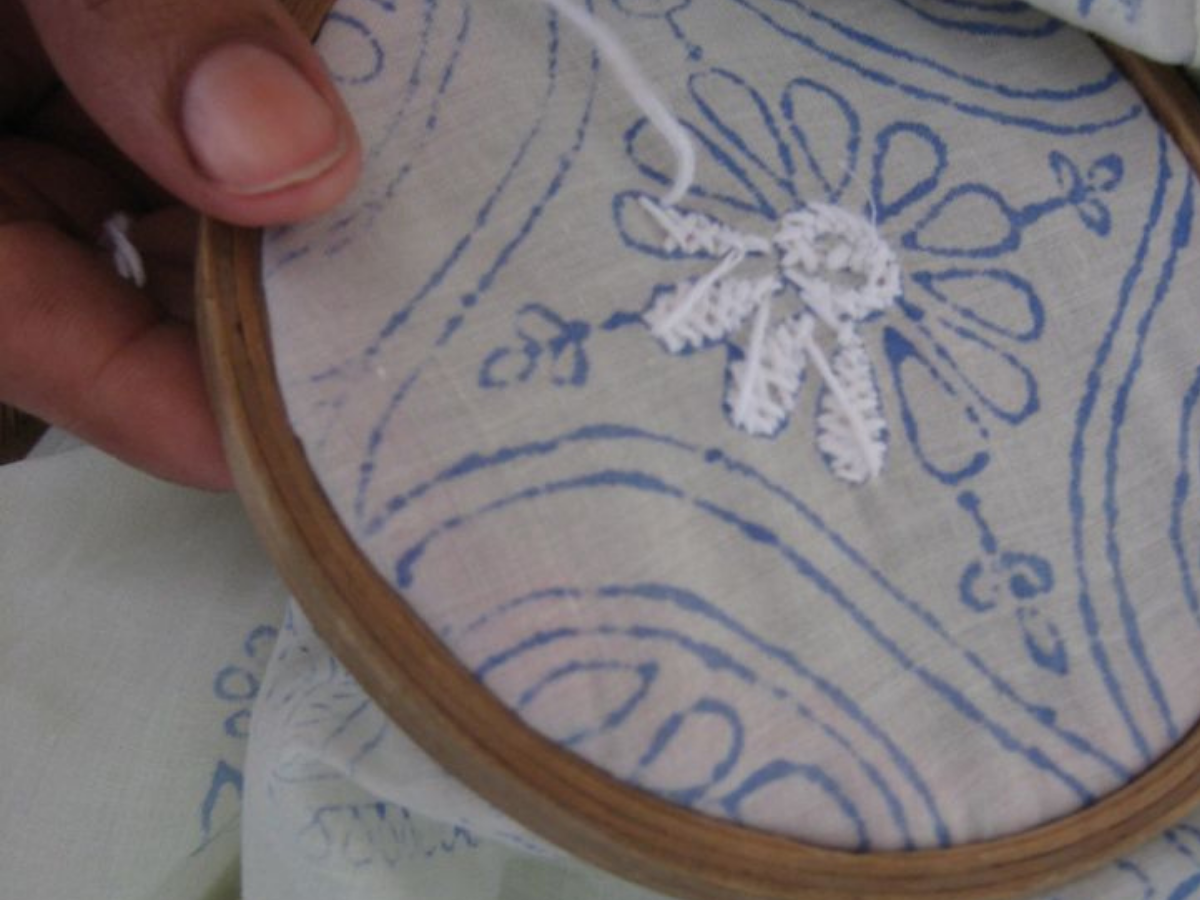
Block Printing the Design: First, the desired pattern is carved onto a wooden block stamp. This design is then printed onto the cloth using traditional safeda (white) or indigo (blue) dyes. The fabric is then cut to the final shape.

- The Needlework Marathon: Next, the cloth is set in a frame, and the karigars (artisans) begin the needlework. Depending on the complexity, a single Chikankari garment can take anywhere from 20 days to a staggering six months to complete. That's true slow fashion
3. Over 30 Stitches Tell the Story
Chikankari is not just one stitch; it's a library of techniques! The art encompasses over 30 different stitches, each giving a unique texture and 'shadow' effect. These stitches are broadly classified into three main types:
- Flat Stitch: Simple stitches that lie flat against the fabric.
- Raised/Embossed Stitch: Stitches that are built up to give a raised, 3D effect.
- Open Trellis: Stitches that involve creating a 'jaali' or net-like open pattern within the fabric itself.
These detailed stitches often incorporate elegant motifs inspired by Mughal architectural themes, connecting your kurti to the grandeur of historical palaces.

4. From White-on-White to a Rainbow of Hues
The classic look of Chikankari involves thick white cotton thread embroidered onto soft cotton fabrics—a timeless, subtle elegance.
Historically, only white threads were used. However, to keep up with contemporary trends and changing tastes, the craft has evolved. Today, you can find beautiful pieces featuring coloured threads on fabrics like pure Georgette, chiffon, silk, and crepe. This innovation allows the art to stay relevant while preserving its core technique.

5. Fabric Choice is Crucial for the Art
Why is Chikankari traditionally done on lighter, softer fabrics? Because the fabric's texture must allow the needle to pierce through easily and consistently.
The most popular choices—cotton, georgette, chiffon, silk, and crepe—all share this characteristic. They ensure the intricate shadow work can be executed perfectly, making the final garment light, beautiful, and full of the culture you cherish!
0 comments